Okay, here’s something I’ve been meaning to push back on for a while. The “Krabi is the world’s best beginner climbing destination” pitch you see repeated across every travel blog isn’t wrong, exactly. It’s just oversold in a way that sets people up for a slightly disappointing first day.
Railay and Tonsai are genuinely good for first-time climbers. The routes are short, the rock is solid limestone with plenty of natural holds, the bolts are close together, and the scenery is — fine, I’ll concede that one — pretty hard to beat from the top of a 15-metre wall. But the gap between “I want to try rock climbing” and “I just did rock climbing” is wider than the marketing makes it sound. Your first climb is going to be hotter, harder on your hands, and involve more time standing around while someone explains figure-eight knots than the Instagram reels let on.
This post is for the person who’s thinking “I should try climbing while I’m in Krabi” and doesn’t really know what that looks like. I’ve watched a lot of friends and visitors do their first climb here over the years, and there’s a pattern to how it actually goes versus how the brochures frame it. Worth knowing in advance.
Where You Actually Climb
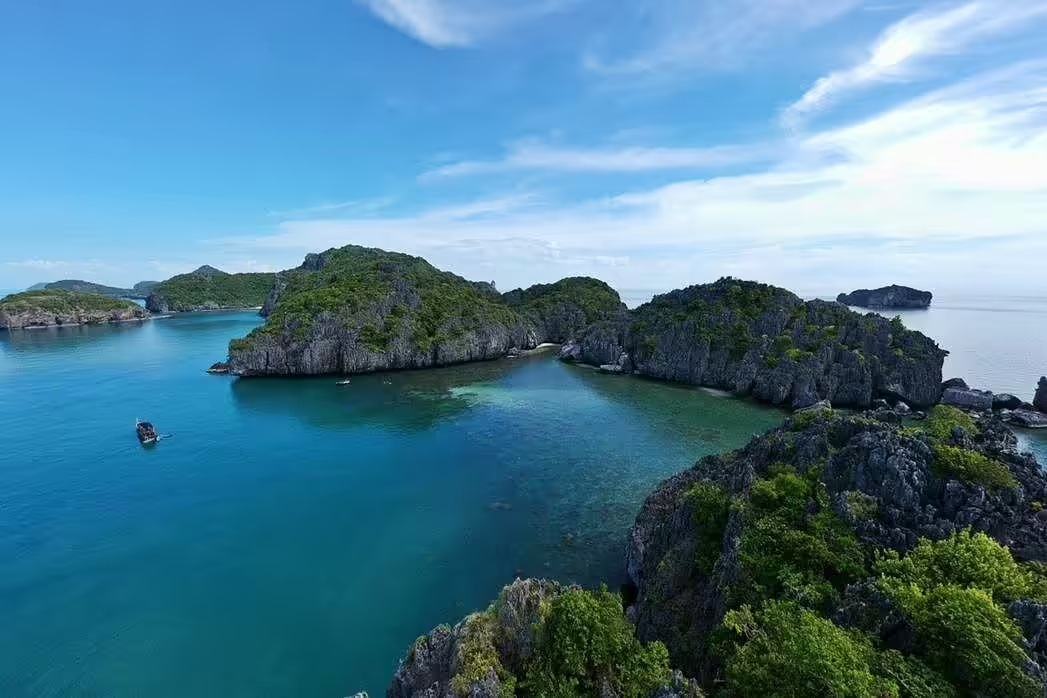
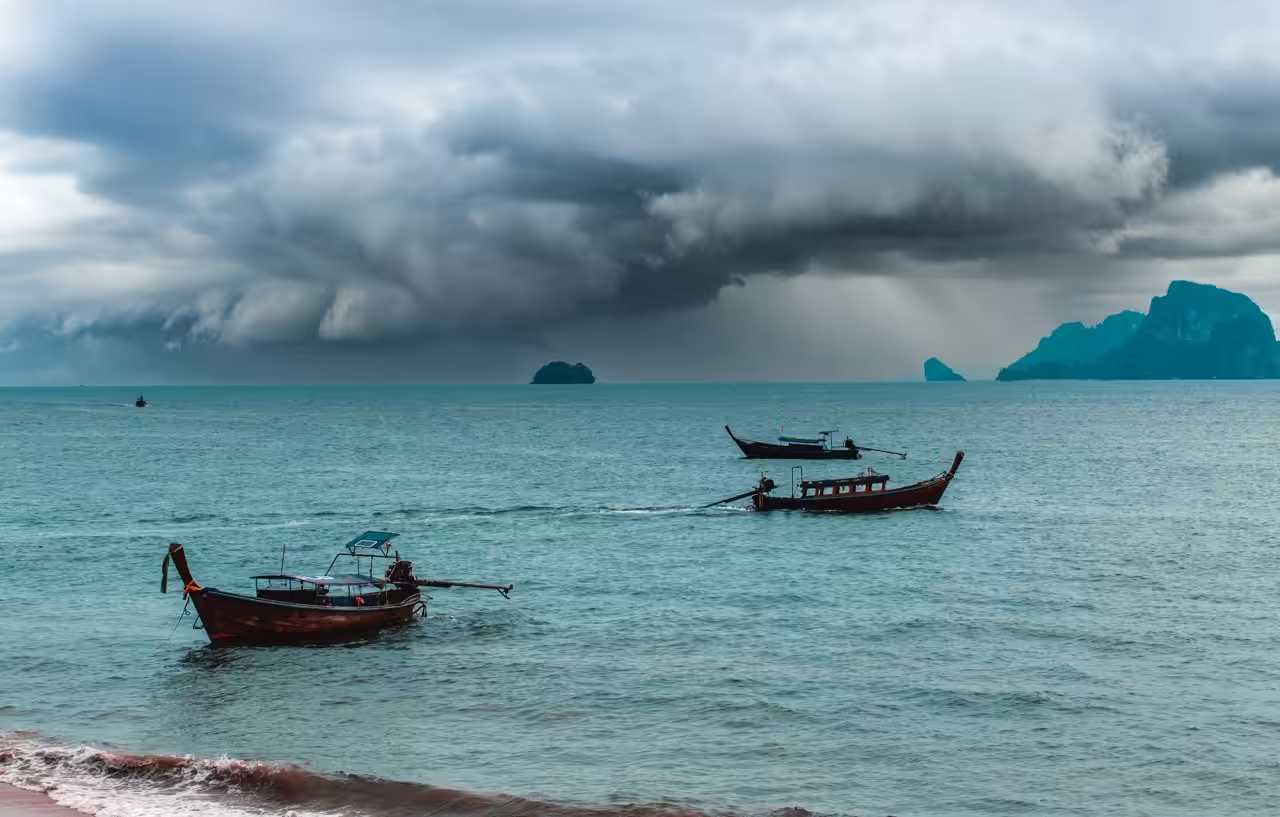
Most of what people call “Krabi climbing” happens on a small peninsula called Railay, which is technically still on the mainland but cut off from the rest of Krabi by limestone cliffs. You can only reach it by boat. Longtails from Ao Nang Beach run constantly, around 150 baht per person in a shared boat and about 15 minutes across. From Krabi Town itself there are longer boats, but most people stage out of Ao Nang because the shops and the restaurants and the guesthouses are all closer together there.
Railay splits into two sides. Railay West is the picture-postcard beach side where the resorts sit, where most day-trippers end up, and where very little climbing actually happens. Railay East is the quieter side, with mangrove flats instead of white sand, and it’s where most of the beginner climbing walls are. You walk across the peninsula in about 10 minutes on a paved path. The climbing shops are mostly clustered along this walkway, so you’ll pass them on your way to the walls.
The wall most first-time climbers end up on is called 1-2-3 Wall, named because the three easiest routes on it are graded 5, 5, and 5+. If that grading means nothing to you yet, don’t worry. The short version is these are about as gentle as bolted sport climbing gets anywhere in the world. Muay Thai Wall is the other classic beginner spot, slightly taller and with a few more moderate options. Both are a short walk from the East beach, and both have ample space at the base for a whole course group to hang out between climbs.
Around the corner from Railay, reached either by a rocky scramble at low tide or by another short longtail, is Tonsai Beach. Tonsai used to be the scruffy climber-hippie counterpart to Railay — bamboo bungalows, reggae bars, people who’d been there three months and planned to stay six. A lot of that is still there, but the past few years have brought in some bigger resorts that have changed the character. The climbing community is still strong, though, and if you’re staying more than a couple of days it’s worth crossing over for at least one session. Tonsai’s walls tend to be quieter than Railay’s in the afternoon, especially in peak season when 1-2-3 Wall can genuinely queue up.
The Schools, and Which Course Actually Teaches You Anything
There are probably a dozen climbing schools operating between Railay and Tonsai at any given time. The old-guard names you’ll see again and again are King Climbers (one of the first, been there since the mid-90s), Hot Rock Climbing School, Basecamp Tonsai, Real Rocks, and Tex’s. All of them are competent. None of them are dangerous, as far as I’ve ever heard. The difference is more about group size, instructor experience, and whether you end up in a twelve-person group on a half-day taster or a four-person group doing something more structured.
Pricing is pretty standardised across shops. A half-day session runs about 1,200 baht. A full day is somewhere between 1,800 and 2,000. A three-day beginner course, which includes learning to lead climb and clean an anchor at the top of a route, is around 5,500 to 6,500 depending on operator and season.
Here’s where I’d push back on what most beginner guides say. The half-day course is not really a climbing course. It’s a taster. You’ll do some ground-level knot practice, your instructor will belay you up two routes while you figure out the basic movement, and then it’s lunchtime. You’ll have climbed. You won’t really know how to climb. If you want to say you tried it and come home with a photo, that’s fine, a half-day is perfectly adequate for that purpose.
If you want to actually learn something you can use — the ability to rent gear, climb with a partner, and not die — the three-day course is where that happens. Over those three days you’ll cover top-rope belaying properly, lead climbing basics, how to check a partner’s harness, how to clean an anchor, and you’ll have climbed enough routes to actually get comfortable with the movement on rock. A lot of climbers I know got their start on a three-day Krabi course and have been climbing ever since. Hard to say the same about anyone who did a half-day taster.
So the advice is pretty simple. If climbing is something you’re seriously curious about, book the three-day. If you’re only in Krabi for two nights and want to tick a box, the half-day is fine. Don’t expect the half-day to turn into anything more than that, because it won’t.
What Your First Day Actually Looks Like
Let’s walk through a typical first-day-of-climbing day in Krabi, so you know what you’re signing up for.
The morning meet-up is usually 8 or 8:30 a.m. at the shop’s Ao Nang office. You’ll get a short safety briefing on a dry-erase board, sign a waiver, and head down to the pier. The longtail boat across takes maybe 15 minutes. From the boat you’ll walk across Railay from West to East, past the walkway shops and resorts, and arrive at the base of whichever wall your group is doing that day. Usually 1-2-3 Wall or Muay Thai Wall for first-timers.
Gear fitting takes longer than you’d think. Climbing shoes are meant to be worn snug to the point of slight pain. This is intentional. The tight fit is what lets you stand on small footholds later, and you get used to it surprisingly fast. Your harness gets checked twice. The instructor will demonstrate the figure-eight follow-through knot (the one you tie into the rope with) and you’ll practice it a few times on a piece of rope before you go anywhere near the rock.
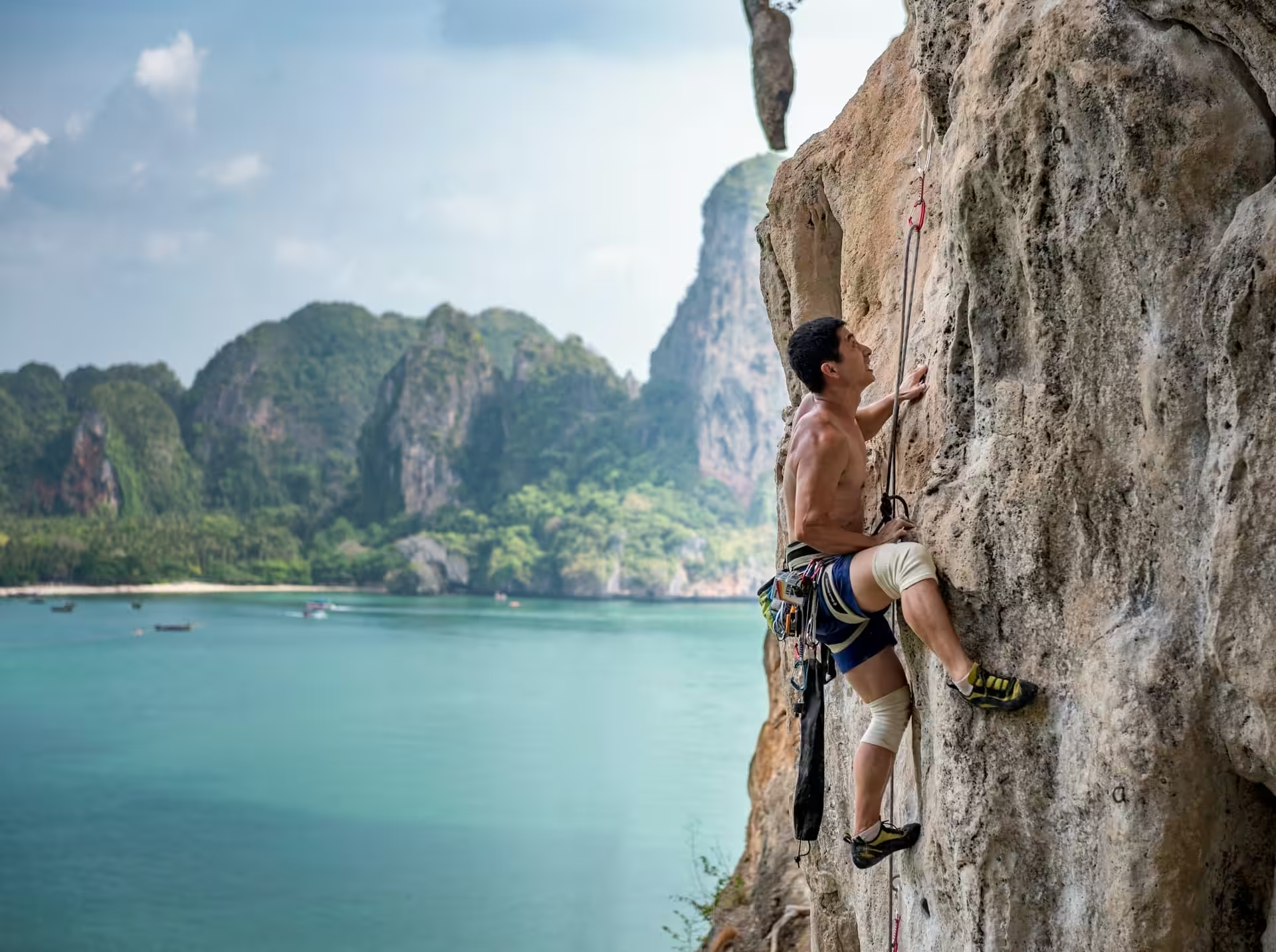
Your first route will be a 5 or 5+. You’ll tie in, your instructor will belay you, and you’ll start climbing. Almost everyone has the same experience on their first climb. You get three or four metres off the ground, your forearms start burning, you grip everything twice as hard as necessary, and you forget everything the instructor told you about using your legs. That’s fine. That’s how everyone starts. Come back down, rest for five minutes, and try again. The second climb is always better.
Most beginner courses get you up four to six routes in a day, with a lunch break at one of the Railay East restaurants. Your hands will be wrecked by the end of it, specifically the pads of your fingers. Tape your fingertips before your second day if you’ve got a multi-day course, because limestone chews through skin faster than you’d expect.
The unspoken killer of a Krabi climbing day is the heat. 1-2-3 Wall gets direct sun from mid-morning onwards. Muay Thai Wall stays shaded longer. Smart guides rotate you between walls based on sun exposure, but if you’re on a busy-season day with everyone queuing for the same routes, you might end up baking in direct afternoon sun for an hour waiting for your turn. Bring more water than you think you need. Two litres each, minimum.
Grades, Gear, and the Stuff Websites Don’t Mention
Thai climbing routes use French grading, which goes 3 (very easy) through 4, 5, 5+, 6a, 6a+, 6b, and upwards. For context, your first course will put you on 5s and 5+s. By the end of a three-day course, some people are comfortable top-roping easy 6a routes. A 6a is roughly equivalent to 5.10a in American grading, which is challenging but doable for a motivated beginner with a good instructor. You don’t need to memorise any of this before you arrive, the instructor will pick routes that match where you’re at. Worth knowing enough to understand the conversation, though.
If you’re renting gear independently rather than bundled into a course, expect to pay about 500-700 baht per day for shoes, harness, and a belay device. Check the shoes before you pay. Some rental shops have stock that’s been beaten up by a lot of feet and the rubber on the soles is shot. Stiff, worn-smooth shoe rubber makes climbing harder than it needs to be, especially as a beginner who’s already figuring out footwork.
Chalk bags are cheap to buy outright, 150 to 250 baht at most climbing shops, and it’s the one piece of gear I’d recommend owning even if you rent everything else. A good chalk habit actually helps your grip more than beginners realise.
On deep water soloing, which is the other thing you’ll see heavily advertised around Railay and Tonsai. The pitch is “climbing without ropes, but over water, so it’s totally safe.” It is genuinely a cool experience. It is not, however, the foolproof safe option it’s marketed as. Depending on tides, the water at the base of certain walls isn’t as deep as you’d hope, and I’ve seen people come away with bruises and cuts from clipping rocks on the way down. Do it if you fancy it. Just don’t do it on day one of your climbing life, and don’t assume the water catches every fall cleanly.
Timing: When to Come, When to Skip
Peak climbing season in Krabi runs roughly November to March. The air is cooler (still hot by most people’s standards, but manageable in the morning), the humidity drops, and the rock is dry. This is when you want to be here if climbing is the main reason for the trip.
April and May are dry and brutally hot. You can still climb, but you need to start early and be off the walls by noon. Afternoon climbing in April on a south-facing wall is genuinely miserable, and I’ve seen people cut their courses short because they just couldn’t handle the heat anymore.
June through October is rainy season, which means the rock gets wet, dries slowly, and in heavy rain periods is basically unclimbable. Some walls dry faster than others depending on how sheltered they are, and experienced guides know which ones. If you’re in Krabi in August and set on climbing, ask around and be flexible with your day. Sometimes there’s a two-hour window after morning rain where something climbable opens up. Sometimes there isn’t, and you just do something else.
October is the shoulder month where luck really comes into play. I’ve had perfect October days in Krabi and I’ve had four days straight of rain. No way to predict it.
Whatever month you’re here, start early. An 8 a.m. start gets you three or four hours of cooler, shaded climbing before the heat properly builds. By 2 p.m. on most walls in most seasons you’ll want to be off the rock and in the shade with a cold drink. The climbing shops all know this and build their schedules around it, so your morning-start course isn’t going to be fighting against the clock in some unusual way. It’s just how things work here.
So Should You Actually Do It
Honestly, yes, for most people. If you’re reasonably able-bodied, not terrified of being 10 metres off the ground, and willing to take instruction from someone who knows more than you do, Krabi is a good place to try climbing. The walls are forgiving, the instructors are experienced, the whole scene is well-established. You’d be hard-pressed to find a better first-day setup anywhere in Asia.
Where I’d push back is on the half-day taster sell. If you’re only in Krabi for a night or two and you want to tick the climbing box, sure, book a half-day and come home with the photo. Just don’t expect it to be a meaningful introduction to the sport. It’s an activity, not a learning experience. That’s not a knock on the shops, it’s just what a half-day can realistically cover.
If climbing is something you’ve been thinking about for a while, or if you’re in Krabi for five or six days with some flexibility, do the three-day course. It’s the single best climbing-education deal I know of anywhere in Southeast Asia, and the people I know who’ve taken it still talk about it years later. Some of them have gone on to become real climbers. A lot of serious climbers first tied into a rope here.
Skip climbing entirely if you’ve got a recent wrist, shoulder, or finger injury, or if heights genuinely panic you in a way that willpower can’t talk down. There’s no shame in it. The beach bar on Railay West is a perfectly respectable alternative.
If you’re building out a Krabi trip and want help sorting where to base yourself, how long to stay, and how to fit climbing alongside the rest of what’s worth doing around the area, reach out about your travel to Krabi and we’ll put together something that makes sense for your timing and experience level.
Ready to Explore Thailand’s Paradise Islands?
Join thousands of travelers who’ve seen Thailand’s best islands with our local guides. Contact us today to plan a personalized island adventure at a pace that actually suits you.